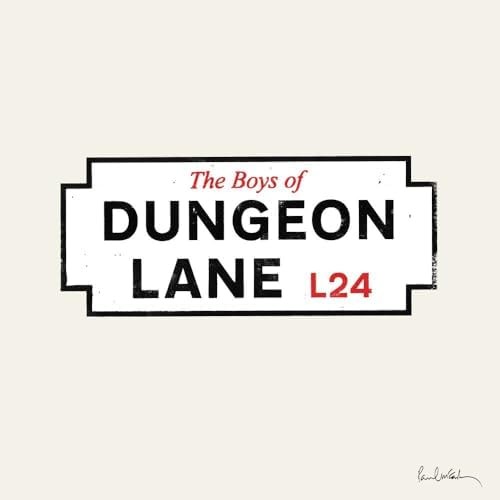
The Boys of Dungeon Lane (2026)

 1. As You Lie There
 2. Lost Horizon
 3. Days We Left Behind
 4. Ripples in a Pond
 5. Mountain Top
 6. Down South
 7. We Too
 8. Come Inside
 9. Never Know
 10.Home to Us
 11.Life Can Be Hard
 12.First Star of the Night
 13.Salesman Saint
 14.Mama Gets By
Every time Paul McCartney releases a new album, there is an inevitable reaction from longtime fans. It generally goes something like this: "Well, surely this has to be the last one."
Then Paul promptly releases another record and makes everyone look foolish.
What makes The Boys of Dungeon Lane particularly remarkable is not merely that it exists, but how astonishingly good it is. At eighty-three years of age, McCartney has somehow managed to produce a work that many fans are already describing as his finest collection of songs in decades. Some particularly enthusiastic souls are throwing around numbers like forty or fifty years. Whether one agrees with such lofty praise is open to debate, but there is little question that this ranks among his strongest latter-day efforts.
Perhaps even more impressive is the fact that he once again handles the majority of the instrumentation himself. Producer Andrew Watt certainly contributes throughout the project, but this remains very much a Paul McCartney album in the purest sense. It sounds as if he locked himself in a studio, pick up whatever instrument is required, and simply g0t on with it.
Of course, none of that would matter if the songs weren't there.
Thankfully, they are.
What this album ultimately demonstrates is something most music fans already know but occasionally forget: nobody writes a catchy tune quite like Paul McCartney. Plenty of artists can write better lyrics. Plenty can create more adventurous arrangements. Some may even produce more emotionally profound work. But when it comes to crafting melodies that immediately take up residence in your head and refuse to leave, McCartney remains virtually unmatched.
One of the album's greatest strengths is that it feels wonderfully unpolished. Not sloppy, mind you, but human. The rough edges are left intact, and the record benefits enormously because of it.
Nowhere is this more apparent than on the delightful opening track As You Lie There. The song begins with McCartney casually talking over an acoustic guitar figure, reminiscing about a youthful crush. The remarkable thing is that he doesn't sound like an eighty-three-year-old man looking backward. He sounds like the young man he is describing. Midway through the performance he stumbles, stops, and deliberately restarts a line. Most artists would have edited the moment out immediately. McCartney leaves it in.
The result is oddly charming.
What might technically qualify as a mistake instead becomes one of the song's most endearing moments. It gives the listener the sensation of sitting in the room while the song is being born rather than listening to a carefully manufactured studio creation.
That spirit permeates the entire album.
Like many of McCartney's later works, The Boys of Dungeon Lane spends considerable time wandering through the landscapes of memory. He reflects on childhood, family, friendships, and simpler times with the ease of someone who has accumulated eight decades worth of stories and finally decided to share them. There is a warmth throughout these songs that feels entirely genuine. One can almost picture a grandfather seated in a comfortable chair, surrounded by attentive grandchildren, happily recounting tales from long ago.
As if the album weren't already loaded with enough nostalgia, McCartney also reunites with the only other surviving Beatle for the charming duet Home to Us. Hearing Paul and Ringo Starr together in 2025 remains one of those experiences that still feels faintly miraculous. For those keeping score at home, Ringo is now eighty-five years old and somehow appears just as incapable of slowing down as his former bandmate.
The entire album is packed with memorable little gems. If there is one slight misstep, it might be Salesman Saint, a sentimental tribute to his parents and their struggles during the Second World War. The song is perfectly pleasant, but McCartney perhaps leans a bit too heavily into the nostalgic atmosphere. The vintage instrumentation and period flourishes occasionally feel a touch overdone. It's not a bad song by any means—it simply has the misfortune of appearing alongside material that is considerably stronger.
Like their longtime counterparts in The Rolling Stones, Paul McCartney continues to defy both expectations and common sense. Every new release feels like it should be the final chapter, yet somehow another one appears. More remarkably, these records continue to matter. They aren't merely legacy projects or nostalgic exercises designed to cash in on past glories. They contain genuine creativity, enthusiasm, and inspiration.
And perhaps that is why The Boys of Dungeon Lane feels so refreshing.
In an era where the world often seems determined to descend into chaos on a daily basis, there is something profoundly comforting about hearing an eighty-three-year-old musical legend deliver an album this warm, charming, and effortlessly enjoyable. It may not solve any of life's problems, but for forty-five minutes or so, it certainly makes them easier to ignore.
Not bad for an old geezer.
Go back to the main page