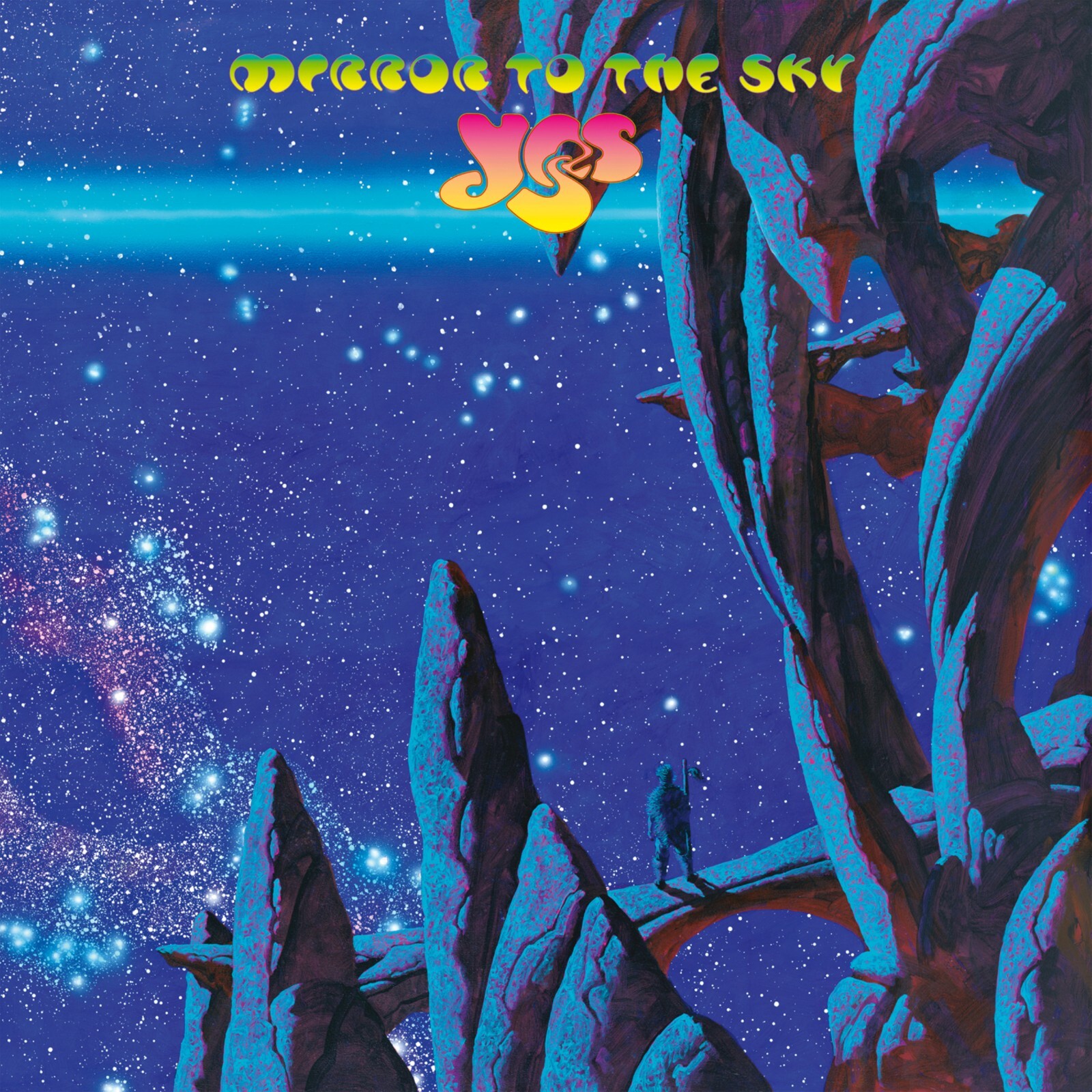
Mirror to the Sky (2023)

Disc One
1. Cut From the Stars
2. All Connected
3. Luminosity
4. Living Out Their Dream
5. Mirror to the Sky
6. Circles of Time

Disc Two
1. Unknown Place
2. One Second is Enough
3. Magic Potion
One of the longstanding criticisms leveled against progressive rock is that it isn't exactly a genre overflowing with memorable hooks. Nobody generally leaves a Yes album humming a chorus for the next three days or snapping their fingers to a catchy refrain while standing in line at the grocery store. That's simply not the point. Progressive rock has always been more concerned with complexity than accessibility. These are musicians who enjoy odd time signatures, shifting tempos, lengthy instrumental passages, and compositions that occasionally require a road map and a compass to navigate. The focus is often on creating something ambitious rather than something that can soundtrack a high school dance.
Yes has always been one of the genre's most faithful practitioners. Their greatest epics are rarely memorable because of a particular chorus or lyric. Rather, the enjoyment comes from immersing oneself in the music while it's happening. The satisfaction is found in the journey, not necessarily in what remains afterward. One may struggle to recall specific melodies hours later, yet still feel thoroughly rewarded by the experience.
Mirror to the Sky is very much that kind of album.
I've listened to it multiple times now and, if I'm being honest, there are very few melodies or choruses that immediately spring to mind afterward. Yet that observation feels almost irrelevant. What matters is that while the album is playing, it is thoroughly engaging. Much like its predecessor, The Quest, the record creates an atmosphere that encourages listeners to simply sit back, relax, and allow the music to unfold at its own pace. If anything, the band sounds more focused this time around. The songs feel slightly tighter, the arrangements slightly more confident, and the overall presentation more assured.
Remarkably, the lineup remains largely intact, which is no small accomplishment in the world of Yes. The only significant personnel change is behind the drum kit, where Jay Schellen assumes duties following the passing of longtime drummer Alan White. Given the band's notorious history of lineup changes, lawsuits, reunions, departures, and assorted personnel dramas, maintaining any degree of stability almost feels like a miracle.
This leaves Steve Howe as the lone surviving member of what many would consider a "classic" Yes lineup, though even that definition tends to spark endless debates among devoted fans. Howe once again handles production duties, just as he did on The Quest, and the results suggest that he should probably continue doing so for as long as the band exists. His guitar work remains the dominant instrumental voice throughout the album. Unlike the previous record, where his presence occasionally felt overwhelming, the balance here is improved. Nevertheless, his fingerprints are everywhere, particularly on the magnificent Luminosity, which stands head and shoulders above everything else on the album and easily earns the title of its finest moment.
Meanwhile, Jon Davison continues to prove that he was perhaps the best possible choice to occupy the unenviable position of replacing Jon Anderson. Yes fans are famously protective of Anderson's legacy, and understandably so. Davison wisely avoids imitation while still capturing enough of the classic vocal character to make the transition feel natural. The differences between the two singers certainly exist, but they're minimal enough that they enhance the music rather than distract from it.
There are a few minor blemishes along the way. The opening track, Cut from the Stars, feels slightly removed from the traditional Yes formula and takes a little time to settle into the album's overall mood. Living Out Their Dream is probably the weakest piece on the main disc and feels somewhat underdeveloped compared to the surrounding material. Fortunately, neither track does significant damage to the listening experience.
Not surprisingly, the strongest moments arrive during the album's longer compositions. The fourteen-minute title track is precisely the sort of sprawling musical journey that Yes fans have always embraced. These extended pieces allow the band to stretch out, develop ideas organically, and create the sense of tranquility that has always been one of their defining characteristics. Listening to them feels less like consuming individual songs and more like watching landscapes slowly unfold through a train window.
There is also something genuinely heartening about witnessing a late-career renaissance from a band that, by all rights, should probably have faded away years ago. What's particularly remarkable is that much of this resurgence has occurred with musicians who weren't even part of the group's most celebrated era. Yet somehow they have managed to capture the spirit of classic Yes while avoiding the trap of simply recreating the past.
Like The Quest, the album also includes a bonus disc containing three additional tracks. Unfortunately, history repeats itself here as well. While the songs are perfectly listenable, they simply don't measure up to the material found on the primary album. One almost gets the impression that the band intentionally segregated the weaker material onto a separate disc to avoid disrupting the flow of the main release. If that was the strategy, it was a wise one.
Consequently, my enthusiasm is directed almost entirely toward the first disc. Judged on that basis alone, Mirror to the Sky stands as another impressive entry in this unexpected late-career revival. It may not contain the band's next Close to the Edge, but it succeeds where it matters most. For nearly an hour, it transports the listener to another place, and for a progressive rock band entering its sixth decade, that's no small achievement.
Go to the Next Review
Go back to the main page